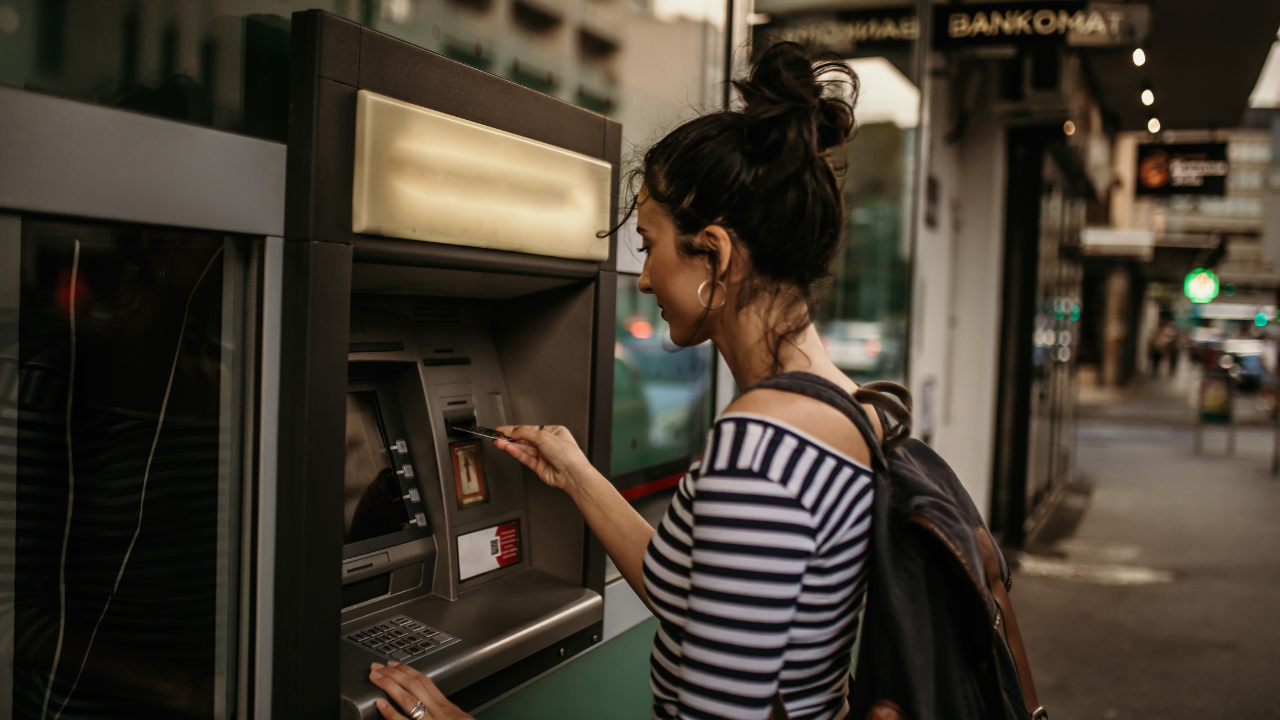
Where can I cash a check without a bank account or ID?


Key takeaways
- The issuing bank often cashes checks for non-customers for $6 to $8, and typically requires a government-issued photo ID.
- Walmart also requires identification and charges flat fees of $4 to $8 to cash most checks.
- Check-cashing stores are the most expensive option, charging around 1% to 10% of check value — a $500 check could cost you $50.
- Opening a free checking account eliminates all check-cashing fees, and can also provide mobile deposit, FDIC insurance and financial credibility.
You can cash a check without a bank account at the issuing bank, major retailers like Walmart, check-cashing stores or through prepaid card apps — though fees can range from $4 to over $50, depending on the method. According to FDIC data, 4.2% of U.S. households (approximately 5.6 million) are unbanked, making these alternatives necessary but costly.
Your cheapest option may cost just a few dollars at Walmart, while the most expensive route may be a check-cashing store that charges 1% to 10% of the check’s value. Opening a free checking account remains the most cost-effective long-term solution, eliminating check-cashing fees entirely.
How much does it cost to cash a check?
Check-cashing fees vary dramatically based on where you go. Here’s what you’ll actually pay:
| Method | Cost for $500 check | Cost for $1,000 check | ID required? |
| Free checking account | $0 | $0 | Yes |
| Issuing bank | $6-$8 | $6-$8 | Yes |
| Walmart or Kroger | $3-$8 | $3-$8 | Yes |
| Cash App | Free | Free | For account setup |
| PayPal | $25 (5%) | $50 (5%) | For account setup |
| Prepaid card | Commonly $25 | Commonly $50 | Sometimes |
| Sign over to friend who can cash the check at their bank | Free | Free | Sometimes |
| Check-cashing store | $5-$50 (1%-10%) | $10-$100 (1%-10%) | Sometimes |
Cashing one $500 check per month at Walmart costs $96 annually. At a check-cashing store charging 5%? That’s $300 per year. A free checking account costs $0 and takes 10 minutes to open online.
Shop around
What do I need to cash a check without a bank account?
Requirements vary by location, but you’ll typically need:
- Government-issued photo ID, required at most locations. Driver’s license, state ID card, passport or military ID
- The physical check itself. The check must be made payable to you, be signed on the front by the payer and must not be expired (typically 180 days for personal checks).
- Additional documents may be necessary at some locations. You may be asked for your Social Security number, thumbprint or fingerprint or proof of address like a utility bill or lease agreement.
Payroll checks (most widely accepted), government checks (Social Security, tax refunds, stimulus), cashier’s checks, money orders and personal checks.
1. Cash your check at the issuing bank — sometimes the cheapest option
Your first stop should be the bank listed on the check — many banks will cash checks drawn on their accounts even for non-customers.
Look at the check to identify the issuing bank. Visit a branch with your government-issued photo ID and the check. The bank verifies funds are available and cashes the check, usually within five to 10 minutes.
How much does it cost?
Typically $6 to $8 for checks, and some may waive the fee for checks valued at a low dollar amount. For example, Bank of America charges $8 for any check over $50, Chase charges around $8 and Wells Fargo reportedly charges around $7.50.
2. Cash your check at a major retailer (Walmart, Kroger)
National retailers like Walmart, Kroger, and other grocery chains offer check-cashing services. These are widely available and often more affordable than dedicated check-cashing stores.
Visit the customer service desk or money center with your check and government-issued ID. They’ll verify the check, collect the fee, and give you cash minus the fee.
How much does it cost?
Walmart charges $4 to cash checks up to $1,000 and a maximum fee of $8 for checks greater than $1,000. In some cases, Walmart cashes two-party personal checks, but these are limited to a maximum amount of $200 and come with a $6 fee. At Kroger, fees and limits vary by location.
Make sure to call ahead to confirm the retailer cashes the type of check you have and verify current fees.
3. Use check-cashing apps (PayPal, Venmo, Cash App)
Mobile apps offer a digital alternative to physical locations, letting you deposit checks via smartphone.
- Cash App: It costs $0 to upload a check into your mobile Cash App wallet by snapping a photo of your check in the app. Funds are generally available in up to six business days, although it could be sooner. Mobile check deposit limits are five checks per month, $3,500 per check and $7,500 per month.
- PayPal: For expedited check-cashing, PayPal charges a 2% fee for payroll and government checks with a preprinted signature, and 5% for all other checks. The funds are typically available within 10 business days when you don’t choose the expedited option.
- Venmo: When you opt to receive the money in minutes, Venmo charges a 2% fee for payroll and government checks with a preprinted signature, and 5% for all other checks. There’s a limit of $5,000 per check and a monthly limit of $15,000 for mobile check deposit. The funds are typically available within 10 business days when you don’t opt to get the money in minutes.
Some third-party money management apps partner with banks or credit unions that carry federal deposit insurance. This insures your money against the failure of that financial institution — although it does not insure your money if the third-party app were to fail. As such, your money is generally more at risk in these apps than in a traditional insured bank account.
4. Use a prepaid debit card with mobile check deposit
Many prepaid cards allow you to deposit checks using a mobile app, similar to traditional bank accounts. Register a prepaid card that offers check deposit, download its app and snap a photo of your check to deposit funds onto the card.
Your spending is limited by how much money you have loaded onto the card. Additionally, if you register your prepaid card account, you may be able to qualify for some additional protections with the money such as insurance from the Federal Deposit Insurance Corporation.
Prepaid cards have different options for check cashing. Some prepaid cards let you set up direct deposit so that checks are automatically loaded onto the card. Other cards come with an app that lets you snap a picture of your check to load it onto your card. Or, you might be able to deposit your check at an ATM to load the money onto the card.
How much does it cost?
While depositing your check may not come with a fee, you’ll likely pay a fee for immediate access to the check’s funds. For example, Walmart MoneyCard offers a check-cashing service that’s powered by Ingo Money and Green Dot Bank. To cash a check and get your money in minutes, the fee is 1% to 5%, with a $5 minimum fee per check.
5. Sign your check over to someone you trust
If you have a trusted friend or family member with a bank account, you can endorse the check over to them. This method costs nothing but requires careful planning and complete trust.
Make sure the person you are signing over your check to is willing to cash the check and that their bank will cash it. You should accompany your trusted friend to the bank in case the teller requires your ID or has questions about the check. Your friend will also need to have proper identification.
How much does it cost?
Well, as long as your friend is a good friend, it should be free. Keep in mind, however, that you’re going to be carrying around a bunch of cash — which means that if you lose it, you’re out of luck.
6. Use a check-cashing store (last resort only)
Overall, it’s best to avoid check-cashing stores. The high fees are often described as predatory, as they’re imposed on those who are unbanked. What’s more, using these services doesn’t allow for banking relationship building, unlike regular use of a traditional bank’s services.
Check-cashing stores cater specifically to the unbanked, but they’re the most expensive option.
You can visit a check-cashing outlet like ACE Cash Express, Check Into Cash or Amscot with your check and ID. They verify the check, charge their fee and give you cash.
How much does it cost?
Check-cashing stores often charge either a flat fee or one that’s a percentage of the check’s value. The maximum percentage the store is legally allowed to charge varies from state to state. What’s more, the fee may vary based on the type of check and its value.
For instance, consider the pricing structure at Amscot, which charges a 9.9% fee to cash personal checks. So, if you wanted to cash a $500 check, you would wind up paying a considerable $49.50 fee, leaving you with $450.50.
How to cash a check without ID
Cashing a check without a government-issued photo ID is extremely difficult at most banks and check-cashing stores.
Your best option: Sign it over to someone with ID
Endorse the check to a trusted friend or family member who has proper identification:
- Write “Pay to the order of [their name]” on the back.
- Sign underneath.
- Have them cash it with their ID.
- They give you the cash.
Check-cashing stores with alternative ID (limited): Some check-cashing stores accept alternative identification, like Social Security cards, utility bills, birth certificates and other similar documents. However, fees are typically higher and acceptance varies by state and location.
Banks are required by federal law to verify your identity to prevent fraud, money laundering and identity theft. This isn’t negotiable — it protects both you and the financial institution.
Why you should open a checking account instead
If you’re regularly paying fees to cash checks, you’re throwing money away unnecessarily. These services exist to profit from the unbanked — don’t let that be you.
If you haven’t been able to qualify for a standard checking account, some banks offer second-chance checking accounts. These accounts offer customers the opportunity to manage a checking account so that eventually they can qualify for and enjoy the benefits of standard bank accounts.
In addition to convenience, depositing your check into a checking or savings account allows for greater protection and the ability to earn interest on your funds. Having a checking account also enables you to set up direct deposit of your paycheck, if your employer offers this service.
Next steps
Open a checking account
Get an account that allows you to deposit your hard-earned money for free.
Deposit a check
Read about ways to deposit your check in the bank.
How to handle a bounced check
Read what steps to take if your check bounces and how to avoid it in the future.
How to set up direct deposit
Learn the requirements to set up direct deposit of your paycheck.
Why we ask for feedback Your feedback helps us improve our content and services. It takes less than a minute to complete.
Your responses are anonymous and will only be used for improving our website.