|
For the first time in more than
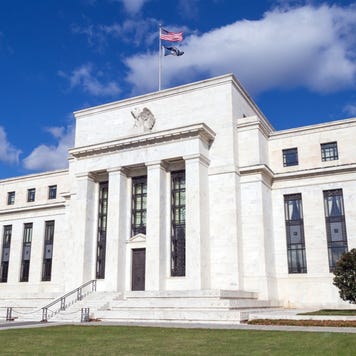
four years, the Federal Reserve has made it cheaper
to borrow, and by an unexpectedly big margin.
 |
| Federal funds
rate |
 |
|
|
|
|
|
The central bank's rate-setting
committee lowered the target for the federal funds
rate by half a percentage point, to 4.75 percent.
The prime rate will fall to 7.75 percent. Consumer
interest rates based on the prime rate -- mainly
home equity lines of credit and most variable-rate
credit cards -- will fall a half-point in coming
weeks.
Yields on certificates of deposit
are likely to fall, too -- especially on shorter-term
CDs -- even though they're not tied directly to
the prime rate. As for mortgages: Don't count
on mortgage rates to fall. They might, but they
might not.
Everyone had expected a Fed rate
cut, from investors and economists to teachers
and car valets. The principal uncertainty had
been about the size of the upcoming cut -- would
it be a quarter of a percentage point, or half
a point?
Most were expecting a smaller, quarter-point
cut. The Fed sprung the surprise half-point decrease
with this explanation:
"Economic growth was moderate
during the first half of the year, but the tightening
of credit conditions has the potential to intensify
the housing correction and to restrain economic
growth more generally. Today's action is intended
to help forestall some of the adverse effects
on the broader economy that might otherwise arise
from the disruptions in financial markets and
to promote moderate growth over time."
The committee added that inflation has been
dropping, but that "some inflation risks
remain."
This rate cut is intended to undo
some of the damage caused by the housing bubble
and the resulting credit crashes. The idea is
to get people and businesses to buy on credit
-- just not so recklessly this time.
Some economists and analysts worry
that the Fed behaved recklessly with this half-point
cut. A quarter-point decrease would have been
preferable, they say.
"It would certainly be inflationary,"
says Anthony Liuzzo, a professor of business and
economics at Wilkes University in Wilkes-Barre,
Pa., speaking before the Fed's announcement. "It's
kind of like eating sugar to get energy. It will
strengthen you in the short term, but in the long
term will be unhealthful."
Each year around this time, Liuzzo
prepares an estimate of upcoming holiday spending.
He forecasts a 3.5 percent increase in holiday
spending this year, compared to a 4.4 percent
rise last year. The forecast is subject to revision
if an unexpected event occurs.
Why the Fed cut
Jim Baird, chief investment strategist for Plante
Moran Financial Advisors of Southfield, Mich.,
believes two factors were behind this rate cut.
"First, I would say that the market expects
them to do something," he says. In other
words, the Fed had to meet investors' expectations.
Wall Street expected a rate cut, and would have
reacted badly in the absence of one.
"On a more practical note,
they may very well need to cut, in order to avoid
further softening of the economy," Baird
adds.
Investors wanted a half-point reduction.
Many economists would have preferred a quarter-point
cut for fear that a bigger decrease would look
panicky. Now the Fed has to spin the rate cut
in a way that will make the central bankers look
calm.
"From a psychological standpoint,
they might want to send a message to the market
that they're concerned about developments and
may want to take a more significant step than
just cutting by a quarter-point," Baird says.
There's a risk that further down
the road, the data will suggest that a rate cut
was unnecessary. "But I don't think that
scenario is very likely at this point," Baird
says, because retail sales were weaker than expected
in August. "That is evidence that the consumer
is beginning to pull back a little bit, and that
is not a positive sign for economic growth."
Will the cut affect mortgages? The biggest economic story of the
year concerns housing: Home sales and average
house prices have fallen nationwide, and it's
harder to get jumbo and subprime mortgages. Lower
mortgage rates might ease those troubles, but
a Fed rate cut doesn't necessarily spell lower
fixed-rate mortgages.
From Jan. 3, 2001, to June 25,
2003, the Federal Reserve cut the federal funds
rate 13 times. When you look at what happened
to the 30-year, fixed-rate mortgage in the month
after each cut, here's what you find: Mortgage
rates fell eight times and rose five times.
"There is a huge amount of
misperception among borrowers that if the Fed
reduces the rate half a point, my mortgage rates
will go down," says Dan Dowling, president
of United Mortgage Capital Corp., in Altamonte
Springs, Fla.
Long-term mortgage rates go up
and down mostly in response to investors' expectations
of inflation.
This is the Federal Reserve's first
rate decrease since June 25, 2003. Back then,
the central bank worried that deflation might
descend, crippling the economy, so the Federal
Open Market Committee cut the federal funds rate
to a 45-year low of 1 percent to fuel economic
growth. The rate remained there for a year, and
then the Fed raised short-term rates 17 meetings
in a row, a quarter point at a time -- a gradual
increase that took a little over two years. The
target federal funds rate topped out at 5.25 percent
in June 2006, and remained at that level until
today's decrease.
In June 2003, the Fed justified
its rate cut by invoking the specter of "an
unwelcome substantial fall in inflation."
The central bank succeeded in its aim of holding
off catastrophic deflation. Indeed, the Fed did
such a good job of suppressing deflation that
it invited the opposite -- inflation -- but with
a twist. Overall consumer prices remained under
relative control, but prices of houses skyrocketed.
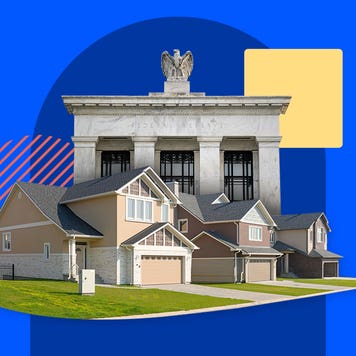
The fabled housing bubble occurred
because the Fed made it cheap to borrow money.
The federal funds rate was below 1.5 percent for
21 months. Mortgage rates were low, too. First-time
and subprime homebuyers rushed in, driving up
house prices. Subprime lenders, eager to make
a buck, relaxed their underwriting standards.
Meanwhile, from June 2004 to June 2006, the Fed
was gradually raising rates.
Early this year, the double whammy
of rising interest rates, plus poorly qualified
borrowers, caused the subprime mortgage market
to collapse. Millions of homeowners fell behind
on their monthly house payments.
The Fed's next rate policy meeting
is scheduled for Oct. 30-31, with the central
bank announcing its rate policy on Halloween afternoon.
|