- advertisement -
 

The Fed and mortgages: different species, life spans

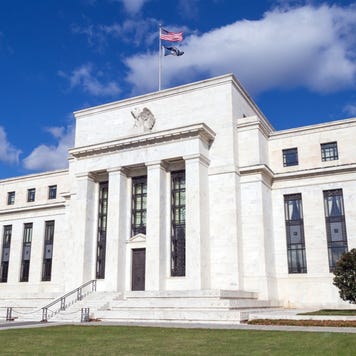
The Federal Reserve cut the target for the federal funds rate by a quarter-point this week, and you can be sure of what that means for mortgage rates: They will climb. Or they will drop. Or they will stay about the same.

- advertisement -

In other words, there isn't a straight connection between what the Fed does and what fixed-rate mortgages do. Sometimes they move in the same direction and sometimes they move in opposite directions. Often, it depends on your time frame.

Some potential borrowers float their rate in advance of a Fed rate cut, expecting long-term, fixed mortgage rates to fall a quarter-point immediately after the Fed cuts a quarter-point. "They do not understand that it does not work that way," says Kevin Weaver, a broker with Kash Mortgage in Lexington, Ky.

Weaver points out that the Fed cut the federal funds rate by a half-point Sept. 18 and a quarter-point on Halloween, and on both occasions long-term bond yields immediately jumped higher. Some mortgage lenders raised rates immediately, too.

After the Sept. 18 Fed rate cut, mortgage rates remained higher for a month before settling back down to where they had been before the central bank's action. When the federal funds rate was cut Oct. 31, long-term bond yields spiked higher, then fell back the next morning.

Mayflies and parrots
A look at recent history shows that you can't make solid, short-term predictions about what will happen to mortgages after the Fed cuts the federal funds rate. From Jan. 3, 2001, to June 30, 2003, the Fed reduced the federal funds rate 13 times. When you look about a month after each of those Fed cuts to see what happened to 30-year, fixed-rate mortgages, here's what you find: Mortgages fell eight times and rose five times.

When you ignore the weekly peaks and valleys, the overall trend was the same: Mortgage rates fell. But when deciding whether to lock a rate or float, mortgage borrowers don't much care what the overall, long-term trend is. They're trying to predict what will happen to rates in the next month or so. The bottom line is that you can't count on a drop in mortgage rates just because the central bank cut the federal funds rate.

This goes to show that the federal funds rate and the 30-year fixed mortgage rate are as different as mayflies and parrots. The latter pair have something in common -- both have wings -- but mayflies are insects that live just a few days; parrots are birds that live a long time. The federal funds rate and fixed-rate mortgages belong to different families and have different life spans, too. The federal funds rate is set by the government and is for overnight loans; fixed mortgage rates are set by the market and are designed for loans of 30 years or even more.

Multiple influences
Mortgage rates respond to changes in economic growth, wages, employment, oil prices, factory utilization and a host of other factors. The federal funds rate is minor. "There are so many other moving parts," says Mark Fleming, chief economist for First American CoreLogic.


Next: "The economy has more moving parts than a belly dancer."
Page | 1 | 2 |
 
 RESOURCES
Mortgage rates mixed as Fed cuts rate
How soon will rate cut hit you?
Rate cut winners and losers
 TOP MORTGAGE STORIES
4 steps to refinance
Dirt-cheap loans on new homes
Mortgage rates drop again


Mortgages
Compare today's rates
NATIONAL OVERNIGHT AVERAGES
30 yr fixed mtg 5.34%
15 yr fixed mtg 4.94%
5/1 ARM 4.94%
Rates may include points
ADVERTISING PARTNERS
RELATED CALCULATORS
  Calculate your monthly payment  
  How much house can you afford?  
  Fixed or adjustable rate: Which is right for you?  
VIEW ALL  
FINANCIAL LITERACY
Rev up your portfolio
with these tips and tricks.
Charles Schwab
- advertisement -
- advertisement -